Job satisfaction varies by sector
In interviews with 24 employees in IT, healthcare and services, it was found that those in IT and healthcare expect their schedules to improve but their social image to worsen, while those in services expect no change in schedules but an increase in their perceived status.
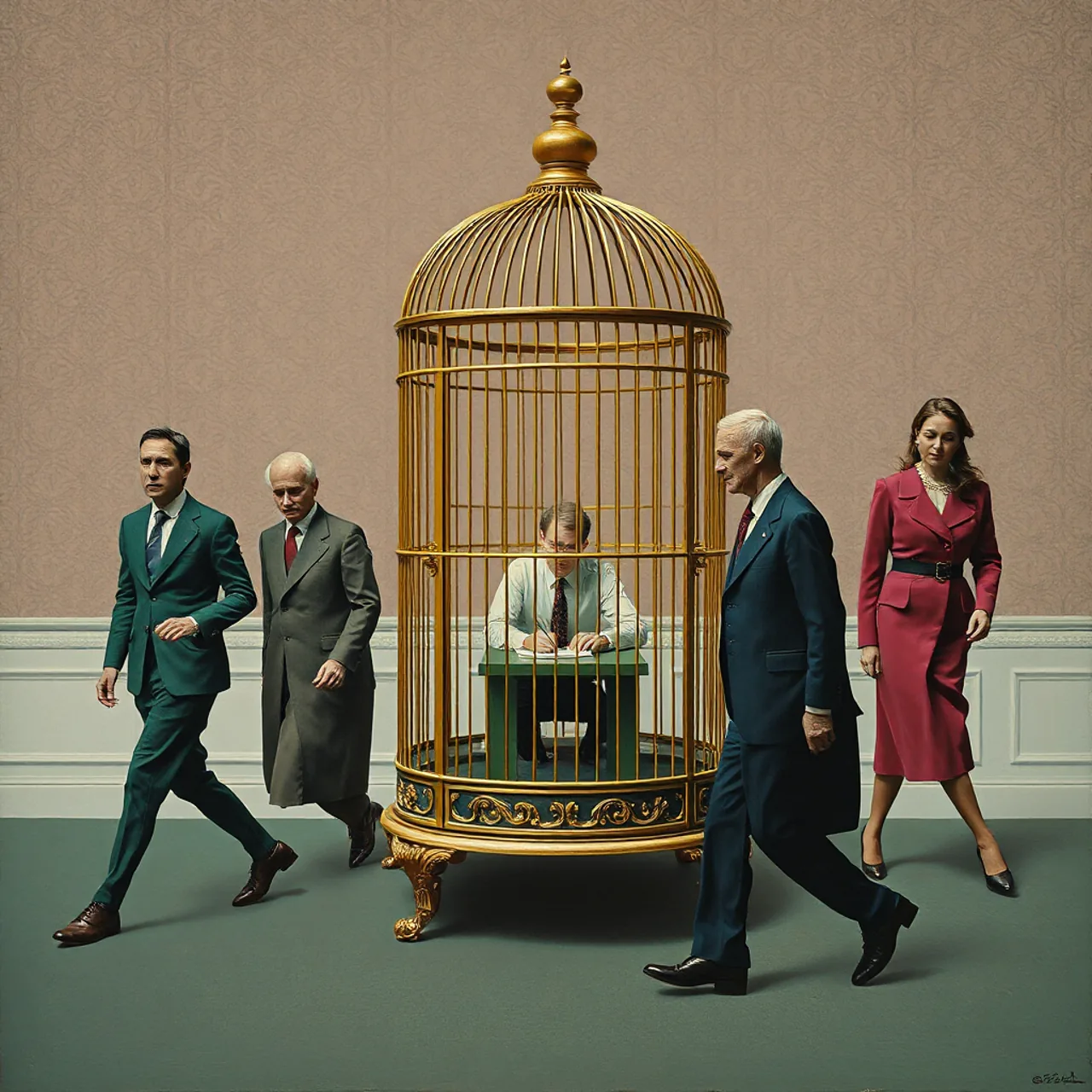
Workers in IT, healthcare and services are already seeing AI change their routines and wonder what will happen to their sense of dignity and purpose at work. The study interviewed 24 professionals from those three sectors through semi-structured interviews and an anticipatory ethnography approach, looking into both their current perceptions and their future expectations about work decency (schedules, security, conditions) and meaningfulness (social image, sense of purpose, relationships). The results show that the gap between what is gained and what is lost is not uniform. In IT and healthcare, AI is expected to improve schedules and reduce administrative load, which raises satisfaction with aspects of decency, but at the same time there is growing concern that automation will make their contribution less visible, damaging social image and the sense of meaningful contribution. Service employees, by contrast, do not foresee improvements in their working day, but do expect a rise in prestige from being associated with AI technologies, which gives them a boost in perceived status and, with it, in the dimension of meaningfulness. These differences indicate that future job satisfaction will depend on how each occupation weighs the trade-offs between more flexible schedules and the visibility of its work.
Those responsible for adopting AI need to go beyond the promise of efficiency and address the specific concerns about image and purpose that arise in each area. In IT and healthcare, AI can be designed to automate routine tasks without hiding the critical role of the human, for example by keeping decision-making spaces visible or strengthening public recognition of results. In services, the focus can be on training staff so that using AI is seen as an improvement in competence and not as a threat, accompanying the rollout with certification programs or career paths that link the technology to professional growth. In every case, measuring both decency indicators (schedules, workload) and meaningfulness indicators (recognition, sense of belonging) makes it possible to detect imbalances before they affect engagement and retention.
Conclusions
- The perception of work decency (schedules) improves in technical and healthcare sectors, but not in services.
- The perception of meaningfulness (social image) decreases in IT and healthcare, while it increases in services.
- Expectations of job satisfaction depend more on the sector than on the technology introduced.
- Adoption decisions must consider the differential effects on decency and meaning depending on the area of work.