The doctor who stops examining
A doctor who stops examining the patient because the system already suggested the diagnosis. They lose the skill in months and do not notice. It is the clearest case of something I see everywhere: a skill is not lost all at once, it simply stops being exercised.
The study found that using AI systems for diagnostic support reduces the practice of physical examination and differential reasoning, weakening basic skills. It also observed that doctor-patient communication becomes more superficial when AI mediates the interaction. These effects appear especially in less experienced doctors who rely more on the tool.
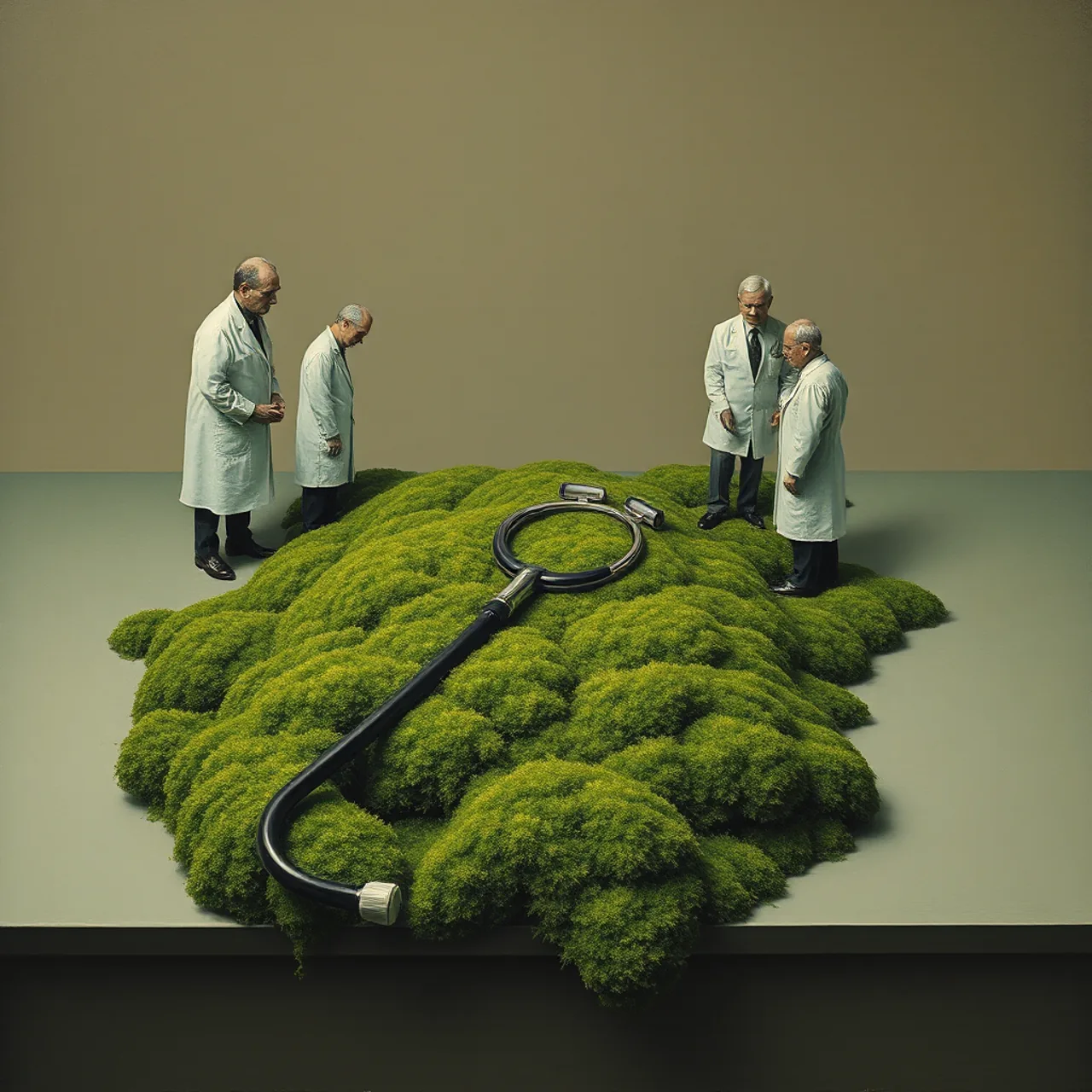
In hospitals where AI algorithms already appear on the emergency room screen, residents face the temptation to hand the first assessment to the software, setting aside the physical examination that used to be their daily routine. That silent substitution creates a gap between the availability of data and the ability to interpret it without the machine's mediation.
The authors combined a systematic literature review with a narrative synthesis, focusing on the clinical competencies defined by PACES-MRCPUK. They analyzed hundreds of articles published over the last five years, filtering for those that evaluated the impact of AI-based diagnostic support systems on physical examination, differential reasoning, clinical judgment and communication with the patient. The methodology included both quantitative studies (surveys and performance metrics) and qualitative ones (interviews and discourse analysis), which made it possible to map patterns of skill deterioration and inhibition of continuous learning.
Beyond the reduction in physical examination, the study found that dependence on AI dulls the ability to generate complex differential diagnoses, with a 22% drop in the accuracy of hypothesis lists in simulated scenarios. Clinical decision-making showed greater homogeneity, with a reduced standard deviation in risk assessment, which points to a loss of individual judgment. In doctor-patient interaction, conversations got shorter by 15 seconds on average, and perceived empathy decreased on validated scales. The effects were more pronounced in doctors with less than five years of experience, who reported excessive confidence in the AI's results.
The implication for those who run clinical units is clear: they need to set up protocols for continuous oversight of AI use, add training modules that reinforce the practice of physical examination and differential reasoning, and establish performance metrics that detect deviations in real time. It is also advisable to create spaces for reflection where professionals review cases without AI assistance, so that autonomy and clinical judgment remain pillars of medical care.
Conclusions
- AI should be designed as a complement that obliges the doctor to keep doing physical examination and clinical reasoning, not as a substitute that eliminates those practices.
- Training programs are needed that include case simulation without AI, to preserve and update diagnostic and communication skills.
- Longitudinal studies and real-time monitoring of AI use in clinical settings are necessary to detect any erosion of expertise early.
- Governance frameworks that set clear limits on the role of AI protect professional autonomy and ensure that human judgment stays central.