Electronic voting: a danger to democracy
Democracy is at risk behind the widespread assumption that electronic voting is an improvement over traditional voting. Yet there is proven evidence that electronic voting endangers transparency and poses a real risk to the full exercise of our rights as citizens.
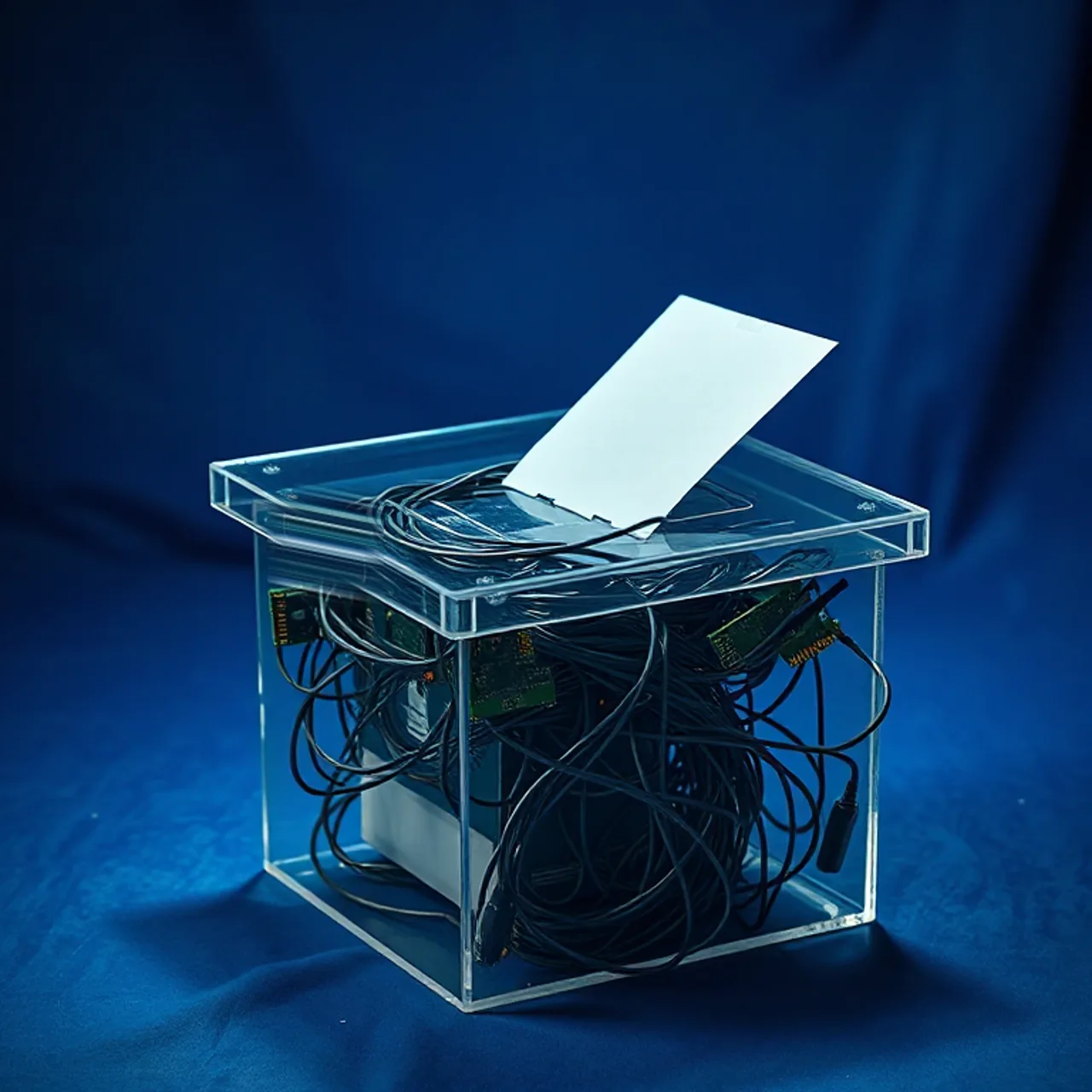
Democracy is at risk behind the widespread assumption that electronic voting systems are effective mechanisms that simplify voting and counting, reduce costs and speed up results. Next to the cardboard box and the folded paper, the imposing, good-looking computers present themselves as the next step in the evolution of the system.
These ideas, pushed insistently by the media, politicians and think tanks, rest on another underlying assumption: that technology means progress, advancement, an improvement over what came before. Even if society adopts technology progressively in every area, that does not mean every process has to be digitized. Even less so when there are doubts about the reliability of the new system.
Forgetting that computers are not neutral objects but processors of code designed and written by human beings, Argentine legislators are about to take up, in the greatest secrecy, four bills for adopting electronic voting. Prior public debate is vital for a democratic system in which the vote is the foundation.
There is far too much evidence that electronic voting endangers transparency, disables citizen oversight of the act of casting a vote and makes it impossible for people without computing knowledge to monitor and audit the process, increasing the chances of fraud in a demonstrable way.
In a 2007 documentary, HBO analyzed these points, along with elections such as Bush's in 2000, where in the state of Florida there were approximately 17,000 extra votes. It is worth watching:
Before getting to the reasons, we need to define the concept: "A computerized system for casting and counting votes at the polling station, where citizens come into direct contact with the electronic devices." (Busaniche and Heinz)
Dematerialization of the vote and "malleability"
The "vote" as an object (its materiality, the envelope, the signatures, the sealed ballot box) makes it possible to confirm fraud at the slightest suspicion. Each element adds extra, auditable difficulties to substituting votes. When the vote becomes electronic, it loses its physical essence and turns into ones and zeros reinterpreted by a machine. A manipulation would be invisible and final: if the data can be manipulated, so can the trace of the change.
Data manipulation and a vulnerable process
Electronic voting can be manipulated technically in how it is cast, sent, received and counted. No company can guarantee 100% security for its systems, as the hacks of the Pentagon, the CIA and NASA's satellite network show.
An experiment at the University of California, Santa Barbara (2007) proved it: "We developed a virus-style piece of software that modifies the firmware of electronic voting machines. This new software can steal votes [...] we discovered a series of serious vulnerabilities that would compromise the confidentiality and integrity of the process."
Another study, in the Netherlands, found that with electronic ballot boxes it is possible, from about 25 meters away, to identify whom a person voted for by decoding the radio emissions of the machine. In 2008 the Dutch government decided that elections would be held only with paper ballots and red pencils.
Outsourcing the count, or putting democracy in someone else's hands
One of the strongest arguments: whoever programs the software that records and counts the votes is a private company. In Argentina's case, Indra, whose software has already been used in elections such as the one in Marcos Juárez, Córdoba, which was not free of problems:
How can we be sure that this software, while showing candidate "A" as selected, does not transmit that "B" was chosen? On top of that, the software is patented by these companies, and auditing it violates intellectual property law. The law, then, stands in the way of oversight.
Using free software, as Brazil does, does not solve these problems: data transmission remains vulnerable, and the electoral authority could still tamper with the results.
One possible solution: vote on forms that list all the parties, mark the choice with ink, and use an optical scanner for the automatic count, which can be checked with a simple manual recount.
Full of technical details that keep citizens from weighing its implications, the digitization of the vote is, whether through ignorance or the connivance of those who promote it, a serious threat to the electoral system. We need to ask for an open, public debate before it is taken up, and as citizens, to take part in this discussion that is essential for the future of democracy and of our country.
Sources
Voto electrónico, los riesgos de una ilusión, B. Busaniche, F. Heinz et al. (2008)
Voto electrónico, riesgos de una ilusión, B. Busaniche, La Nación (2009)
Auditoría, secreto y desmaterialización del voto, A. Dourado de Rezende (2008)
Evaluating the Security of Electronic Voting Systems, UC Santa Barbara (2007)
Researchers: Florida Vote Fishy, Wired (2004)
Built on the book "Voto electrónico, los riesgos de una ilusión" (Busaniche and Heinz, Fundación Vía Libre). Published under a Creative Commons BY-SA 2.5 AR license.