Armchair revolutions
A #hashtag sets cyberspace on fire: crowds gather angrily on Facebook walls to protest, <a href="http://es.wikipedia.org/wiki/Meme" target="_blank" rel="noopener">memes</a> swarm forums and comment sections, dozens of YouTube videos raise their voices and a social uprising seems imminent. Yet locally, these digital initiatives have gained little traction. Are the tools failing, or are we too attached to firecrackers?
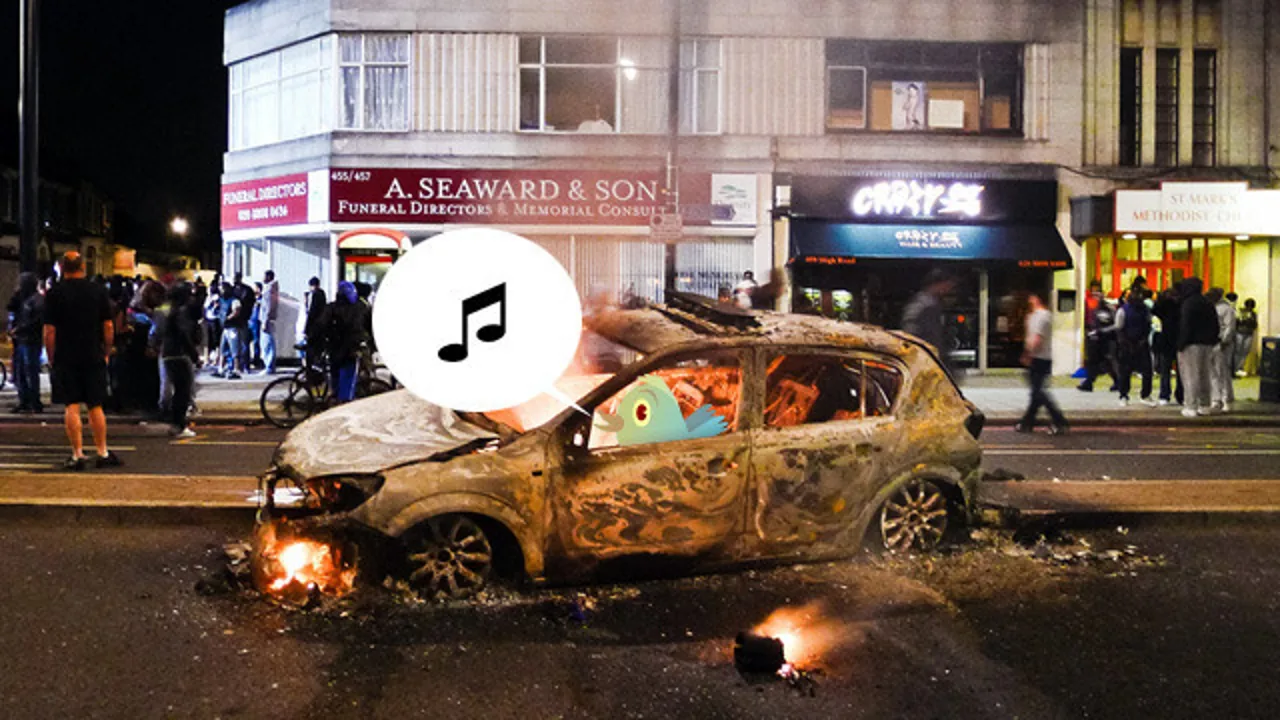
In a social era like ours, where conversations become visible and viral in equal parts and spread at the speed of light, digital protests also seem to have a knack for multiplying noise.
The uprisings in Egypt lit a light of hope in those who saw social networks as an efficient vehicle for communication and coordination of angry crowds. The media, faced with the weight of the various trending topics, reflected that in their analyses.
But these events usually produce a big misunderstanding and a significant confusion: it is not "social networks" that make it possible to coordinate the masses but the technology underneath the tools.
Before the invention of social networks as we know them, after the fateful attack on Atocha station in Madrid on March 11, 2004, citizens organized the protests by SMS. The speed at which messages were sent and forwarded made mass mobilizations possible, and they ended up costing then-president José María Aznar his reelection.
In London, the Egyptian experience led to state control of public pages, hashtags and individuals in an effort to work out where future incidents would occur. Twitter was blamed for being the hub of the mobilizations that drew the attention of the media and the police. So, cleverly, users quickly switched to a tool that cannot be controlled because of its closed nature: the BlackBerry messenger. Once again, when it comes to organizing, the tool is only the excuse that allows fast transmission of data in a way that is very easy to reproduce and forward.
The Occupy Wall Street movement in New York took the use of technology and social channels beyond anything known before, even creating its own wireless networks (the "freedom towers") to stay free of surveillance and control. The digital breathed strength into it first, and then expanded the limits of public demands.
In our country, however, protests organized in the digital sphere have drawn little or no crowd, except the one on the digital levy, which, as an issue that hits close to home for the social-network universe, halted the debate on that law.
Other initiatives that drew a large following on social networks made little impact in the public arena. One example is the massive call for a "users' strike" in the city of Córdoba, where some Facebook groups reached 11,000 users and hundreds of tweets created a hashtag with national reach.
Yet the day of the strike came and only a few users answered the call, with very few recorded cases of people who actually refused to pay the bus fare. And so on, with dozens of other examples.
We call these initiatives, which have great impact in the digital sphere but little relevance in public space, "armchair revolutions."
The gulf in which this concept arises, between a real will expressed through a click, a comment or a retweet and what finally happens, raises some questions about our society:
Do we dismiss any form of organization that does not involve physical contact among those carrying out the mobilization?
Does the lack of physical presence between parties take away the truth of agreements reached on social networks?
Are we unable to face responsibility when the required action means stepping out from behind the PC?
I close with a thought written as a definition:
"Digital pressure only alters reality when the outrage of the click turns into physical risk. Without bodies in public space, virality is just a statistical placebo."
Otherwise, we will keep talking about harmless, lightweight, viral "armchair revolutions," made to soothe the spirit but unable to change our social context one bit.